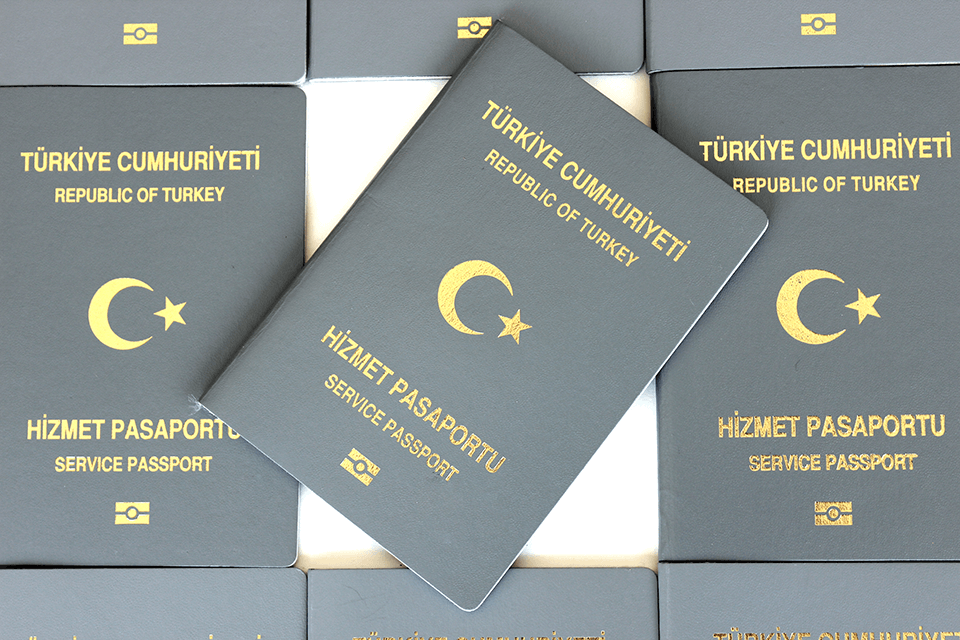
What is the grey (service) passport?
Elanur Erdoğan
Author
What is the grey passport?
When people say “passport”, the burgundy passport often comes to mind—but there are other types. The grey passport, officially the service passport, is a special passport issued to people who undertake temporary official assignments abroad on behalf of the state. One of its biggest advantages is visa-free entry to many countries—but not everyone can apply; only those who meet certain conditions.
The grey passport is issued to public employees sent abroad by the state and to certain professional groups. The following people may be eligible:
- Civil servants
- Municipal employees
- Academics and research staff
- National athletes
- Other employees officially sent abroad by public institutions
This passport cannot be obtained through an individual application like a personal passport; it requires an official assignment letter from an authorised public body. Students are not usually given a grey passport directly—however there are exceptions.
For example, students who participate in international education programmes such as Erasmus+ and are officially delegated by their university may receive a grey passport. This applies especially to students at public universities involved in academic projects. If you have such an opportunity, contact your university’s relevant office for details.
Important: the grey passport may only be used for the duration of the official duty and not for private holidays. After the assignment, it may need to be returned to the authority.
In recent years, misuse cases have led to stricter checks. Assignment letters are now examined carefully to ensure they relate to genuine official duties.
In summary, the grey passport facilitates travel for those working abroad on behalf of the state; visa-free access and its official status make it valuable. Because it is only issued under specific conditions, not everyone can obtain it. If you will travel abroad through Erasmus+ or other programmes, it is worth asking whether your university can issue an official delegation.
Follow our updates for more on international projects and student exchange programmes.