
Youth Steam Academy "Where Technology Meets Art"
Where technology meets art: 44 young people from seven countries building creative, useful solutions for their own communities.
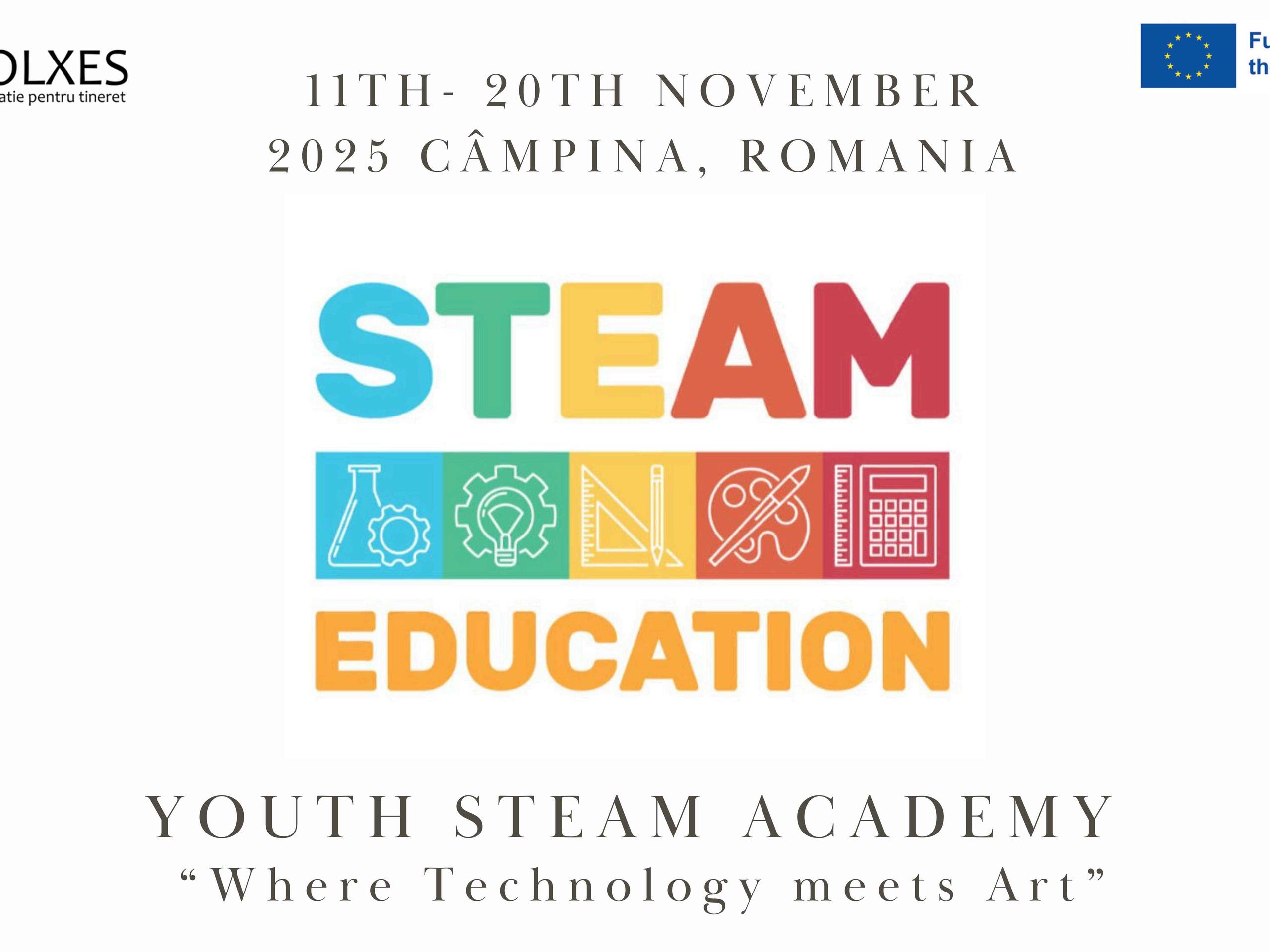
About the project
STEAM education (Science, Technology, Engineering, Arts, and Mathematics) is crucial for youth for several key reasons, each contributing to their personal development and the broader societal and economic context: developing critical thinking and problem-solving skills, preparing for future careers, encouraging lifelong learning, fostering innovation and entrepreneurship, promoting inclusivity and accessibility, addressing global challenges, enhancing collaboration and communication, empowering youth to shape the future, encouraging gender equality and enhancing cognitive development.
STEAM education is vital for youth because it equips them with the critical skills and knowledge needed to thrive in the 21st century, fosters innovation and creativity, and empowers them to tackle global challenges and drive social progress. By embracing STEAM education, we prepare the next generation to be adaptable, innovative, and capable of leading a complex and rapidly changing world.
The project's target group consists of 44 young individuals from 7 countries who will participate in a dedicated training session and will be directly involved in implementing all project activities. The project is entirely based on the principles of non-formal education, the essence of which, is to combine a specific action with the conscious reflection of the learner.
Project aims to develop a broad set of transversal skills in 36 young participants by exploring the intersection of technology and art. The project seeks to empower youth as agents of change by providing a non-formal learning environment where they can acquire the skills needed to create innovative, functional, and aesthetically meaningful solutions to challenges identified within their communities.
Co-funded by the European Union. Views and opinions expressed are those of the author(s) only and do not necessarily reflect those of the European Union or the granting authority.